





Can I Install an EV Charger in a Rented Property in the UK(2025 Guide)
As electric vehicles become the new normal on UK roads, many renters are running into the same frustrating issue: how can you conveniently charge your EV at home when you don't own the property
Whether you're leasing a house, a flat with parking, or a rural cottage with its own drive, installing a home EV charger can seem out of reach but it doesn't have to be. With the right permissions, equipment, and installer, tenants can set up reliable home charging that saves money and adds long-term value to the property.
This guide is designed to help both tenants and landlords understand the process, benefits, and responsibilities involved in fitting an EV charger at a rented home. We'll explore your legal rights, how to get landlord approval, the types of chargers best suited for temporary living, and how smart chargers can help maximise savings especially if you combine them with a time-of-use tariff or solar panels.
If you're a tenant, a landlord, or a letting agent, this article will clarify everything you need to know to make home EV charging simple, fair, and future-proof.
Can Tenants Install an EV Charger in a Rented Home
The Legal Situation in 2025
There is no national law preventing tenants in the UK from installing an EV charger at their rental property. However, as the installation involves physical changes to the building such as drilling through walls or adjusting the home's electrical system you must first get permission from the landlord.
Tenants do not have an automatic right to modify the property, so while the charger itself may be purchased and owned by the tenant, the act of installing it is classed as a property alteration under most tenancy agreements.
Landlord Consent: A Legal and Practical Requirement
To move forward with any installation, you'll usually need:
-
Written approval from the landlord or managing agent
-
Proof of installation by a qualified electrician preferably someone OZEV-registered (Office for Zero Emission Vehicles)
-
Details on removal whether the charger will stay with the property or be uninstalled at the end of tenancy
If you're on an assured shorthold tenancy (AST), check your tenancy agreement. It may include a clause forbidding "structural changes" or "electrical modifications" without approval a common sticking point if not discussed early.
Tip: Present the EV charger not just as a tenant need, but as a value-adding upgrade for the property. This is especially persuasive with landlords focused on long-term returns or ESG (Environmental, Social & Governance) compliance.

How to Ask for Permission (and Get a 'Yes')
Landlords are more likely to approve an installation when you:
-
Check Your Tenancy Agreement
Review your contract for clauses on property modifications. You'll likely need written permission, but this is standard and not a barrier. -
Be Prepared
Come with a clear plan, including the charger type, safety features (like PEN protection), and installation details. Showing you've done your homework builds trust. -
Offer to Pay
Most landlords expect the tenant to cover the cost. Suggest a fair split if needed and highlight that it's a value-adding upgrade to the property. -
Highlight the Benefits
Point out that an EV charger can increase property value, attract future tenants, and keep current ones happy - all key reasons landlords say yes. -
Mention Grants
Inform them about the OZEV grant for landlords - up to £350 per charger installation. Offer to help with the application to make it easy. -
Clarify Ownership
Agree in writing on what happens to the charger when you move out. Options include leaving it behind, selling it to the landlord, or taking it with you. -
Use a Certified Installer
Reassure your landlord that you'll use an OZEV-approved installer for safety and compliance. Evergy can arrange this for you if needed.
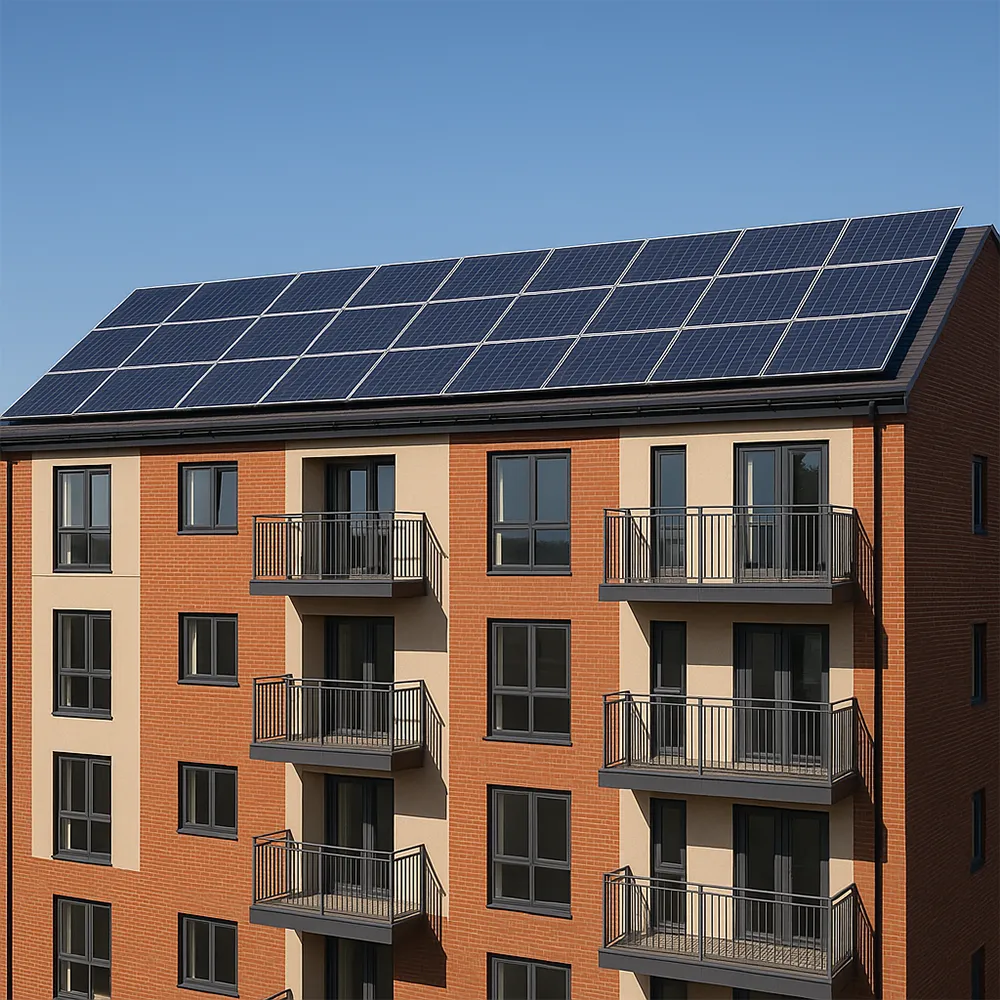
Flats and Shared Buildings: Special Considerations
If you rent a flat and park in a communal car park or on the street, things get trickier. You'll need:
-
Permission from the freeholder or management company
-
Access to metered electricity or approval to tap into a communal supply
-
Possibly a Wayleave Agreement if cabling crosses someone else's property
In such cases, a smart charger that's easy to disconnect or one with solar compatibility may make your proposal more attractive.
Other Things to Consider
Before installing an EV charger in a rental home, take these practical factors into account:
-
Off-Street Parking
You'll need a driveway, garage, or designated parking space to install a charger. If you only have on-street parking, private installation is generally not possible unless the council provides on-street solutions. -
Electrical Capacity
A qualified installer must check if your home's fuse board can support a 7.4kW charger. Most newer homes can, but older properties or flats might need upgrades. -
Planning Permission
EV chargers are usually classed as "permitted development" - no planning permission needed if they're under 0.2m³ and not within 2 metres of a public road. Exceptions may apply to listed buildings or conservation areas.
What Installation Options Are Available for Renters
Not every rented property is the same and not every EV charger installation needs to be permanent. Depending on your landlord's flexibility, your tenancy length, and your parking setup, you've got more options than you might think.
Here's a breakdown of the main installation types and which ones work best in rental situations.
Wall-Mounted Chargers
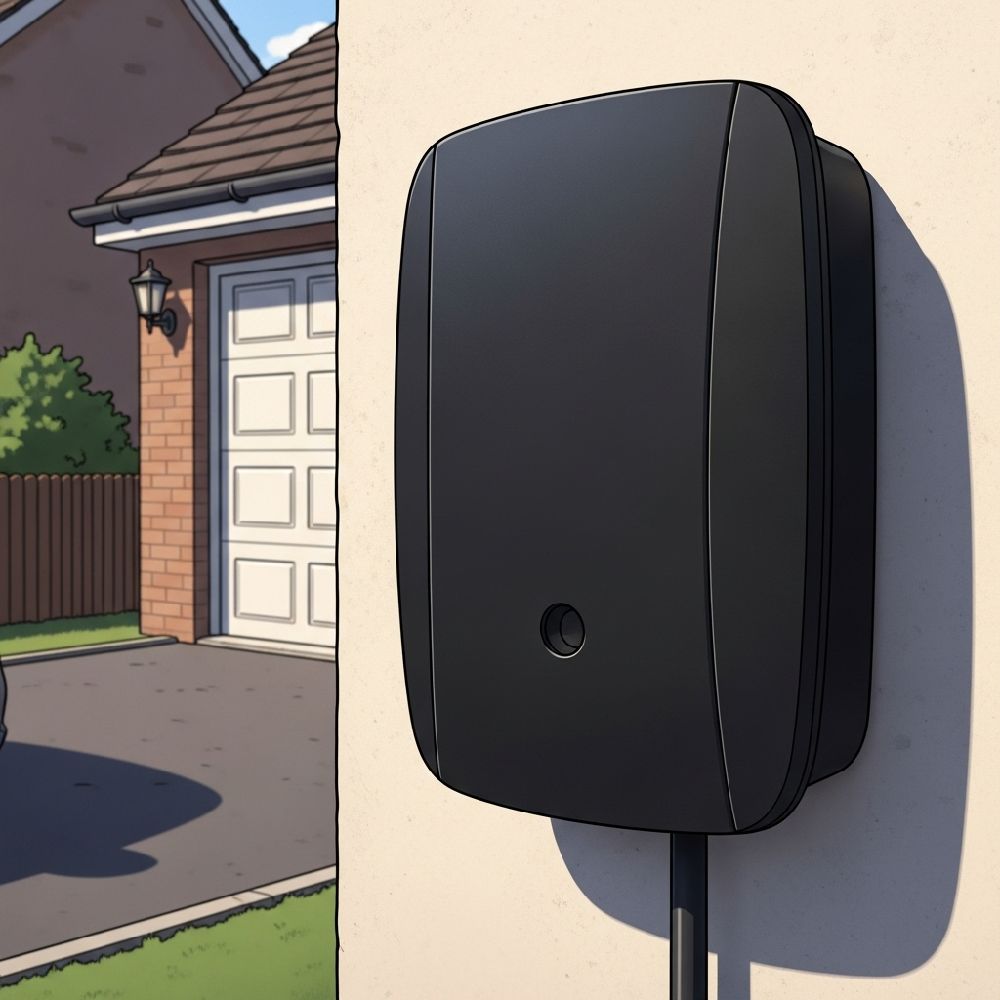
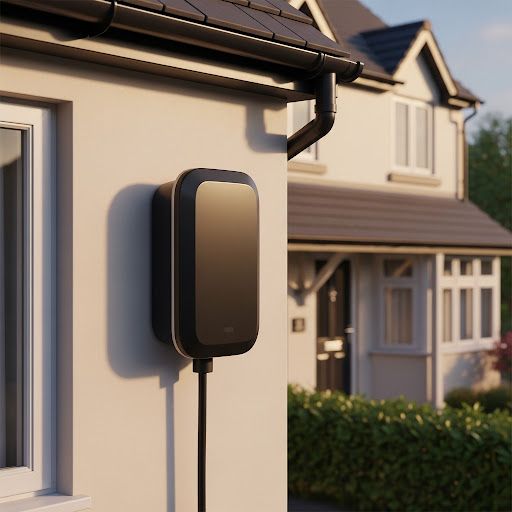
This is the most common type of home EV charger, permanently installed on an external wall, usually near your driveway or parking bay. It's hardwired directly into your home's consumer unit and requires an electrician to run a dedicated cable.
Pros:
-
Fast, reliable charging (typically 7kW for single-phase homes)
-
Compatible with smart tariffs and solar integration
-
Tidy, discreet installation
Cons:
-
Considered a structural alteration landlord permission is a must
-
May not be suitable for flats or properties without dedicated parking
Top Recommendation: Easee One the UK's most installed charger, designed to be future-proof and landlord-friendly thanks to its removable backplate.
Tethered Chargers vs Untethered (Socket-Only)
-
Tethered chargers have a built-in cable. More convenient, but harder to take with you when you move.
-
Untethered units use a separate cable and look neater. They're also easier to remove at end of tenancy.
Try the Zappi GLO Untethered if you want solar-ready, smart control, and clean aesthetics.
Pedestal or Post-Mounted Chargers
If wall-mounting isn't possible, a free-standing EV charger installed on a pedestal or post could be the answer. These are fixed into the ground (like a bollard) and connected to your home's fuse box or garage supply.
Pros:
-
Ideal for detached garages, carports, or shared driveways
-
Doesn't affect building walls some landlords prefer this
Cons:
-
Slightly higher installation cost (trenching may be needed)
-
May still need planning permission depending on layout
Note: Evergy offers pedestal mounting kits compatible with most units. Speak to our team for advice on landlord-friendly post setups.
Solar-Compatible Chargers for Renters
If the property already has solar panels or you're installing panels with landlord consent choose a charger that can divert excess solar energy to your EV.
Recommended: Zappi GLO, Ohme Home Pro, Hypervolt Home Pro 3 smart scheduling, app control, and seamless solar compatibility.

What Are the Costs, Grants, and Tariff Options for Renters Installing an EV Charger
Renters face unique financial considerations when installing an EV charger but that doesn't mean it's unaffordable. With grant support, smart energy tariffs, and scalable hardware, home charging can still make strong economic sense.
How Much Does It Cost to Install an EV Charger in a Rental Property
Costs can vary based on location, charger model, and installation complexity. Here's a general breakdown:
| Type | Typical Cost (Installed) | Notes |
|---|---|---|
| Basic untethered charger | £800 - £950 | Ideal for renters; easier to remove at tenancy end |
| Tethered smart charger | £950 - £1,200 | Includes app control, scheduled charging, and tariff syncing |
| Pedestal/post install | £1,200 - £1,500 | May require groundwork or trenching for cabling |
Tenants typically pay upfront though in some cases landlords may be willing to split the cost if it adds value to the property.
Can Renters Get a Government Grant
Yes under the EV Chargepoint Grant, private renters and flat owners can claim up to £350 off the cost of installing a home charger.
Grant Eligibility (as of 2025):
-
You rent your home or own a flat in the UK
-
You have dedicated off-street parking
-
You use an OZEV-approved charger (like Zappi, Easee, or Ohme)
-
Your installer is OZEV-authorised and provides the necessary documentation
Full guidance available on the UK Government OZEV site.
Why Smart Tariffs Matter More for Renters
Because renters typically pay for their own energy usage (rather than including it in rent), optimising for cost per kWh becomes critical. Smart chargers help by pairing with time-of-use tariffs like:
-
Octopus Intelligent Go: From 7.5p/kWh during off-peak charging hours
-
OVO Drive Anytime: Fixed rate for EV charging, regardless of time
-
Octopus Flux: For renters with solar panels + battery, allows export and import optimisation
Smart chargers like the Ohme ePod or Easee One automatically schedule charging for the cheapest periods.
Landlords & Property Managers: Installing EV Chargers in Rental Properties
If you're a landlord or property manager, installing an EV charger isn't mandatory yet - but it's quickly becoming a sought-after amenity. Here's what you need to know:
1. Why It's Worth Considering
-
No legal obligation yet, but the market is shifting.
-
Increases property value and appeal, especially as EV ownership rises.
-
Tenants may stay longer if they feel their home is "future-ready."
2. Cost and Funding
-
Installations typically cost £800-£1,200.
-
Landlords often negotiate with tenants to share or cover the cost.
-
Government support: OZEV grant covers 75% of costs (up to £350 per charger). Up to 200 claims/year.
-
Infrastructure grant: Up to £30,000 for wiring multiple bays (ideal for flats).
3. Installation Process
-
Use OZEV-approved installers.
-
One-day install with minimal disruption.
-
Landlords should ensure safety compliance paperwork is issued (Electrical Installation Certificate, building control notification).
4. Safety & Maintenance
-
EV chargers are low-maintenance and safe.
-
No legal annual checks required.
-
Optional servicing every few years is advisable, especially for shared or long-term lets.
-
Smart chargers with usage tracking are ideal if electricity is included in rent.
5. Ownership Agreement
Have a written agreement with the tenant covering:
-
Who pays for the charger.
-
Who owns the charger post-tenancy.
-
Correcting any damage if the charger is removed.
6. For Multiple Units or Flats
-
Consider long-term strategy: install a few chargers and pre-wire other bays.
-
Use infrastructure grants to future-proof properties and boost rental appeal.
7. Get Ahead of Regulation
-
Anticipate future legal requirements by acting now.
-
Shows environmental responsibility and modern property management.
Need help Evergy offers end-to-end support - from product advice and grant applications to professional installation.
Costs, Practicalities & Who Pays in a Rental EV Charger Install
Installing an EV charger in a rental property is relatively simple with some planning and communication. Here's what to expect:
1. Installation Costs
-
A typical 7.4kW home charger install in the UK costs between £800-£1,200.
-
Factors influencing price: charger brand, cable length, electrical upgrades.
-
Smart chargers cost more but offer useful features like off-peak scheduling.
2. Government Grants
-
OZEV EV chargepoint grant covers up to £350 or 75% of the cost.
-
Infrastructure grant offers up to £30,000 for wiring multiple bays in flats or developments.
-
Tenants can apply, but landlords usually need to be involved.
3. Who Pays
-
Tenant Pays: Most common - tenant funds installation and leaves charger in place.
-
Landlord Pays: Less common, but attractive for "EV-ready" rentals.
-
Shared Cost: Some split the cost 50/50 or by item (e.g. tenant buys unit, landlord pays for labour).
-
Always put agreements in writing and decide who claims the grant.
4. Electricity Billing
-
Usually wired to the tenant's meter, with costs added to their normal bill.
-
In all-inclusive rentals, landlords may need to manage usage or choose a smart charger with tracking.
-
Smart chargers compatible with tariffs like Octopus Go can significantly cut costs.
5. Insurance & Liability
-
Safely installed chargers are low-risk and generally covered under landlord's buildings insurance.
-
Tenants cover damage to their own vehicle or cable under personal insurance.
6. End of Tenancy
-
Tenants may remove chargers, but it must be done professionally.
-
Most choose to leave it due to