



Sync Energy Ecosystem Guide: A Smarter Whole-Home Energy System for UK Homes
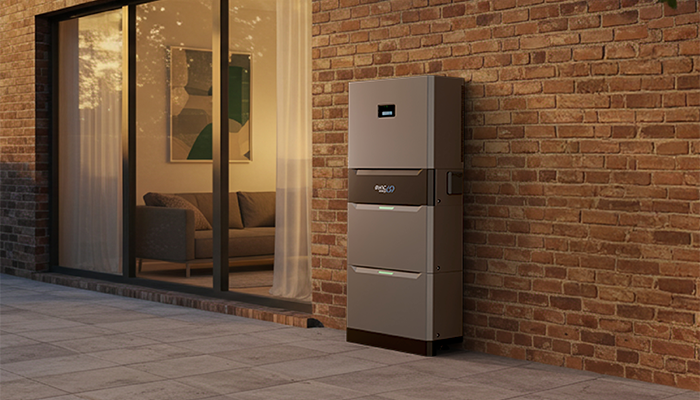
Looking for a complete home energy system? This guide explains how the Sync Energy ecosystem combines battery storage, hybrid inverters and EV charging into one integrated setup for UK homes and installers.
The UK home energy market has changed quickly over the past few years. Solar panels, battery storage and EV chargers are now common additions to homes, but many systems are still pieced together from different brands. That often means multiple apps, compatibility headaches and an installation that feels more complicated than it should be.
The Sync Energy ecosystem is designed to simplify all of that. Instead of separate components trying to work together, Sync offers a fully integrated range including battery storage, hybrid inverters, EV charging and energy management. Everything is built to operate within one system and one app.
This guide takes a proper look at the full Sync Energy range now available, including the modular Flow battery system, hybrid inverter options, solar power diverter and the Wall Charger 2. Whether you are an installer looking for a straightforward system to fit or a homeowner researching a future-proof setup, this article explains how the ecosystem works and where it fits in the current UK market.
As a supplier specialist in renewable technology, we have reviewed the range from both sides: how it performs technically and how easy it is to specify, install and support long term.
Why Integrated Home Energy Systems Are Growing in the UK
Demand for home energy systems has increased significantly as electricity costs have fluctuated and electric vehicles have become more common. Many homeowners now want a setup that can generate, store and intelligently use their own electricity.
Traditionally this has meant combining products from several manufacturers. A typical installation might include:
- A solar inverter from one brand
- A battery from another
- An EV charger from a third
- Separate monitoring apps for each
While these systems can work well, they often require additional configuration and may not communicate perfectly with each other. Integrated ecosystems are becoming more popular because they simplify both installation and day-to-day use.
Sync Energy enters the market as a fully coordinated system designed to handle:
- Solar generation
- Battery storage
- EV charging
- Hot water energy diversion
- Smart tariff optimisation
The aim is straightforward: a single ecosystem that manages the entire home’s energy flow.
Overview of the Sync Energy Range
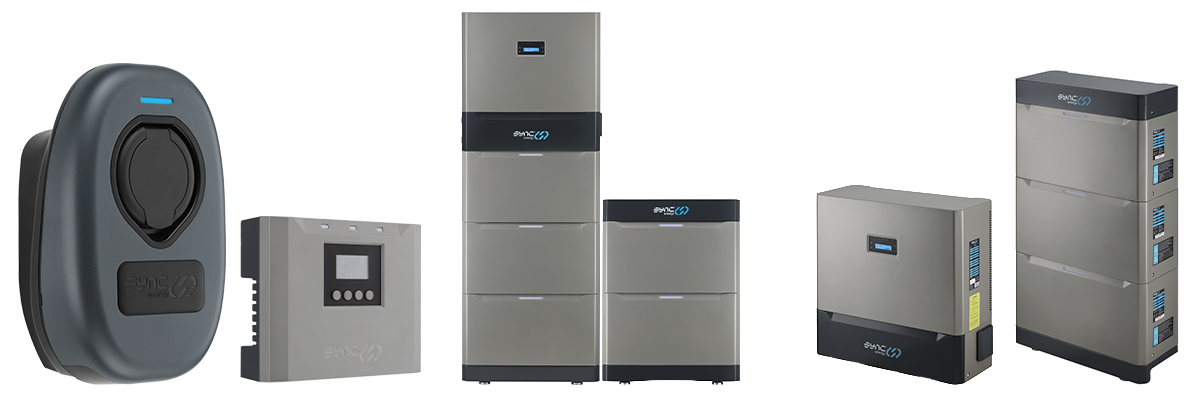
The Sync ecosystem centres around the modular Flow battery and inverter platform, supported by EV charging and energy diversion products that integrate into the same monitoring environment.
Key components include:
- Flow 5.12kWh Battery Module
- Flow Hybrid Inverter (3.6kW and 6kW)
- Flow All-in-One Home Energy System
- Wall Charger 2 Socketed
- Wall Charger 2 Tethered
- Solar Power Diverter
All of these sit within broader categories such as home energy storage systems, solar batteries, solar inverters and EV chargers, making it possible to build a system gradually or install everything together from day one.
For installers, the benefit of a single-brand ecosystem is reduced commissioning time and fewer compatibility concerns. For homeowners, it means one interface to monitor generation, storage and usage.
The Core of the System: Sync Energy Flow Battery and Hybrid Inverter
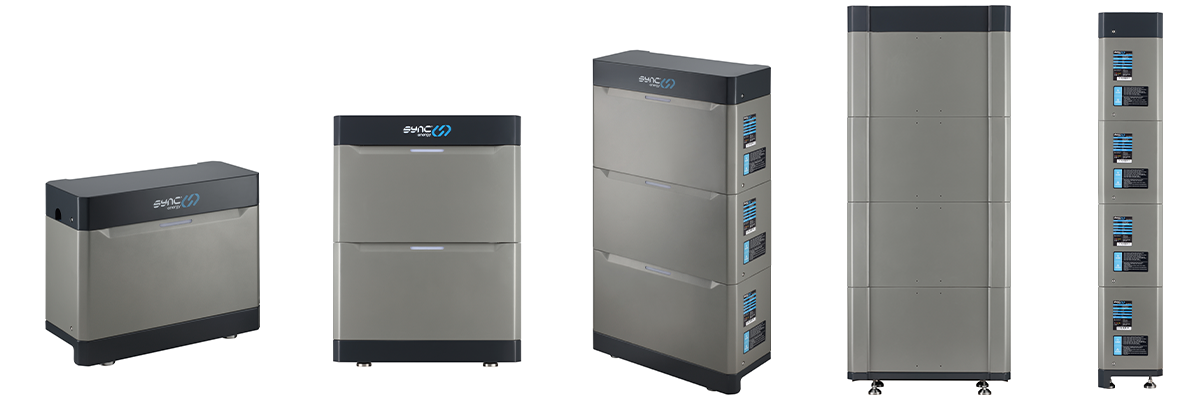
At the centre of the ecosystem is the modular Flow platform, made up of stackable battery modules and a hybrid inverter designed to manage generation, storage and usage within one coordinated system. This is where Sync positions itself as a true whole-home solution rather than just a standalone battery or inverter.
Modular Battery Storage That Scales With the Property
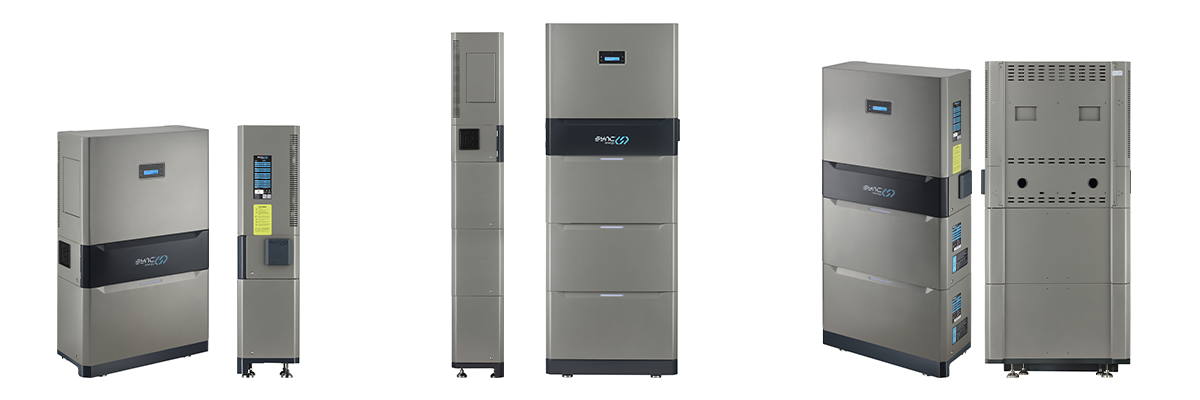
The Sync Energy Flow 5.12kWh Battery Module is designed around modular expansion. Each unit connects directly to the next using integrated connectors, allowing capacity to increase without complex rewiring between batteries.
This approach suits both retrofit installations and new builds. A homeowner can begin with a single module and expand later as energy usage grows, whether that is due to an EV purchase, heat pump installation or increased solar generation.
Typical configurations range from a single module for evening usage support through to larger stacks capable of supporting full-home storage requirements. The system supports significant total storage capacity, making it suitable for properties with higher energy demand or multiple electric vehicles.
For installers, the modular format reduces install time and simplifies future upgrades. There is no need to replace the original system when capacity needs increase — additional modules can be added to the existing stack.
Battery Chemistry and Safety
The Flow system uses LiFePO4 battery chemistry, which is widely regarded across the industry as one of the safest and most stable options for residential energy storage. This chemistry is known for its thermal stability, long cycle life and consistent performance in UK conditions.
Integrated protection systems, battery management controls and enclosed module construction help ensure reliable operation across a wide range of installations.
The Hybrid Inverter: System Control and Solar Integration
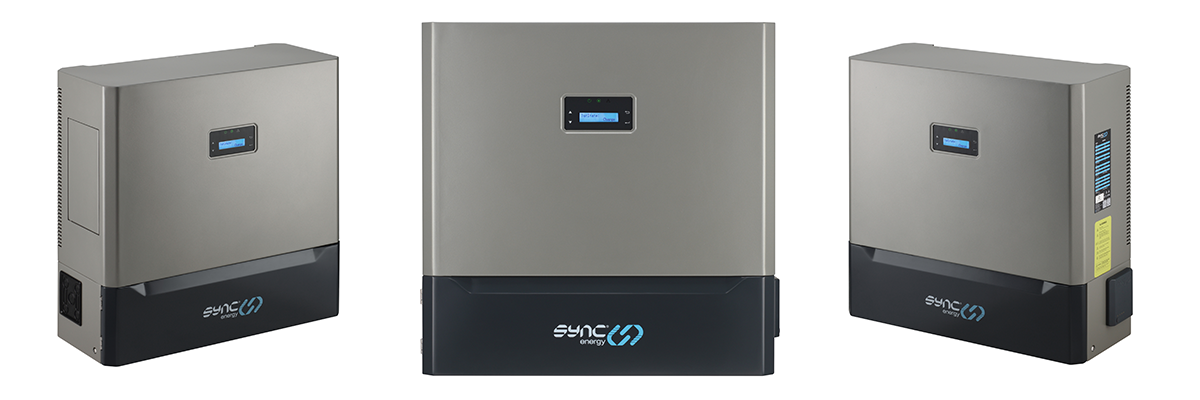
The Sync Energy Flow Hybrid Inverter is available in both 3.6kW and 6kW variants, allowing installers to match output to property size and generation capacity. The inverter acts as the control centre for the system, managing energy flow between solar panels, batteries, the home and the grid.
One of the key features for UK installations is support for PV oversizing. This allows installers to pair a larger solar array with the inverter than its nominal AC output rating, helping maximise generation across darker winter months and variable UK weather conditions.
The inverter also supports battery charging from solar or off-peak tariffs, enabling homeowners to take advantage of time-of-use electricity pricing where available.
The Flow All-in-One System
For installations where space, appearance and simplicity are priorities, the Sync Energy Flow All-in-One Home Energy System combines inverter and battery storage into a single integrated unit.
This configuration is particularly suited to garages, utility rooms and modern new-build properties where a clean, appliance-style installation is preferred. The all-in-one format reduces visible cabling and simplifies installation planning.
From a supplier perspective, this type of system is increasingly popular with homeowners who want a neat installation without the more industrial look of traditional multi-component battery setups.
Designed for UK Installations
The Flow system has been built with UK installation requirements in mind, including grid compliance settings and compatibility with typical residential supply configurations. Commissioning is handled through the installer interface, allowing configuration of grid limits, battery behaviour and system monitoring without complex manual setup.
For trade customers, this means reduced time on site and a more predictable installation process. For end users, it results in a system that is easier to monitor and manage once commissioned.
Building a Complete Home Energy System
When combined, the Flow battery modules, hybrid inverter and optional all-in-one format form the foundation of a complete home energy storage system. From this base, EV charging and energy diversion can be added to create a fully integrated setup that manages generation, storage and consumption automatically.
This modular structure is one of the main reasons integrated ecosystems are gaining traction in the UK market. Homeowners can build the system gradually, while installers benefit from a consistent platform across different property types.
EV Charging Integration: Sync Energy Wall Charger 2
As electric vehicles become more common across UK households, EV charging is now a core part of many home energy system designs. The EV charger is often the largest electrical load in the property, which makes integration with solar and battery storage increasingly important.
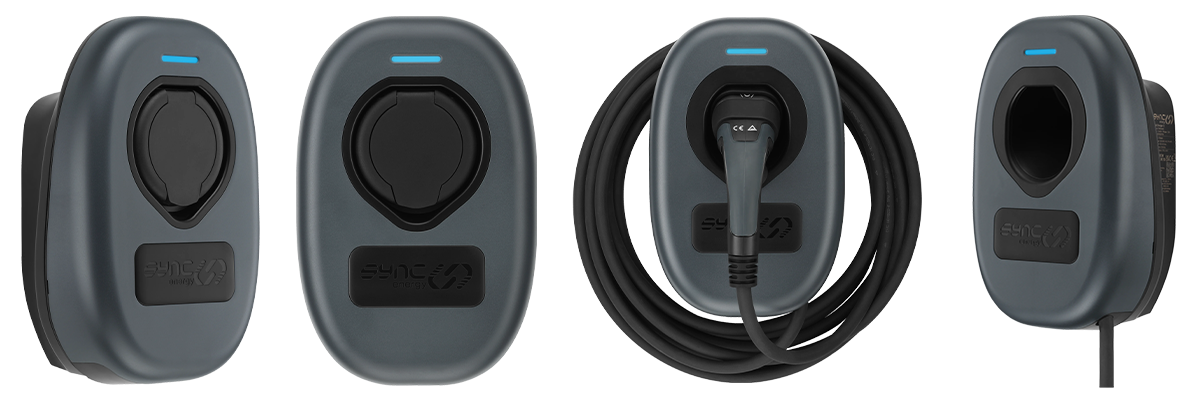
The Sync Energy Wall Charger 2 is designed to work within the wider ecosystem rather than operate as a standalone charger. When paired with the Flow inverter and battery system, it can respond to solar generation levels, grid usage and tariff timing automatically.
Two main versions are available:
- 7.4kW Socketed Version – suited to users who prefer flexibility with their own charging cable.
- 7.4kW Tethered Version – ideal for convenience and daily use at home.
Using Excess Solar Energy for Charging
When installed as part of the full Sync ecosystem, the charger can prioritise surplus solar generation. A CT clamp monitors energy flow at the property and adjusts charging speed to match available export. This allows homeowners to charge their vehicle using excess solar rather than exporting energy back to the grid.
This functionality is increasingly important as export tariffs fluctuate and more households aim to maximise self-consumption of generated electricity.
Tariff-Aware Charging
The charger also supports smart scheduling based on time-of-use electricity tariffs. Where a homeowner has access to off-peak pricing, the system can automatically shift charging to lower-cost periods. This helps reduce running costs even for properties without solar panels installed.
For installers, integrated charging reduces the need for separate control apps and additional configuration across multiple systems.
Maximising Solar Usage: Sync Energy Solar Power Diverter
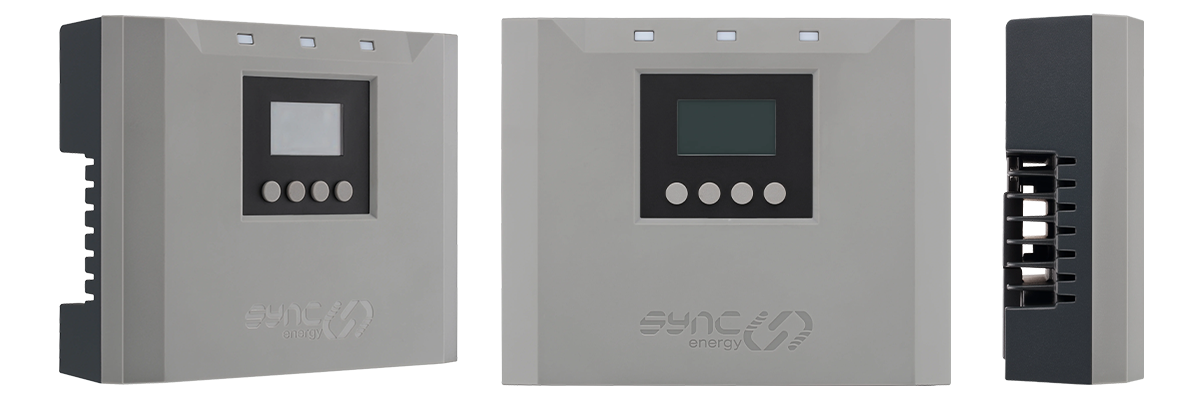
Another component designed to improve overall system efficiency is the Sync Energy Solar Power Diverter. This device monitors surplus solar generation and diverts unused electricity to an immersion heater rather than exporting it to the grid.
In practice, this allows a home’s hot water cylinder to act as a form of thermal storage. Instead of exporting excess solar for a low return, energy is stored as heated water for later use.
This approach can improve the overall return on investment for solar installations, particularly during spring and summer months when generation is highest.
One Monitoring Environment for the Whole System
One of the main benefits of an integrated ecosystem is simplified monitoring. Instead of separate apps for batteries, inverters and EV charging, the Sync system provides a single interface showing:
- Solar generation levels
- Battery charge and discharge
- Household consumption
- EV charging activity
- Grid import and export
This unified view helps both homeowners and installers monitor performance more easily. For installers providing ongoing support, a single platform reduces troubleshooting time and allows faster diagnosis of issues if they arise.
Installation Considerations and Trade Benefits
From an installer perspective, integrated systems are increasingly valued for their predictable setup process. Using a coordinated ecosystem can reduce compatibility checks and commissioning complexity compared with mixing multiple manufacturers.
Key installation advantages include:
- Coordinated commissioning through one interface
- Consistent wiring and configuration approach
- Reduced need for additional control hardware
- Simplified handover for the homeowner
The Wall Charger 2 includes integrated protection features designed to meet UK wiring requirements, which can reduce additional installation steps in certain scenarios. The modular battery system is also designed for manageable handling and positioning during installation.
For contractors specifying systems across multiple properties, using a consistent ecosystem can streamline both installation and aftersales support.
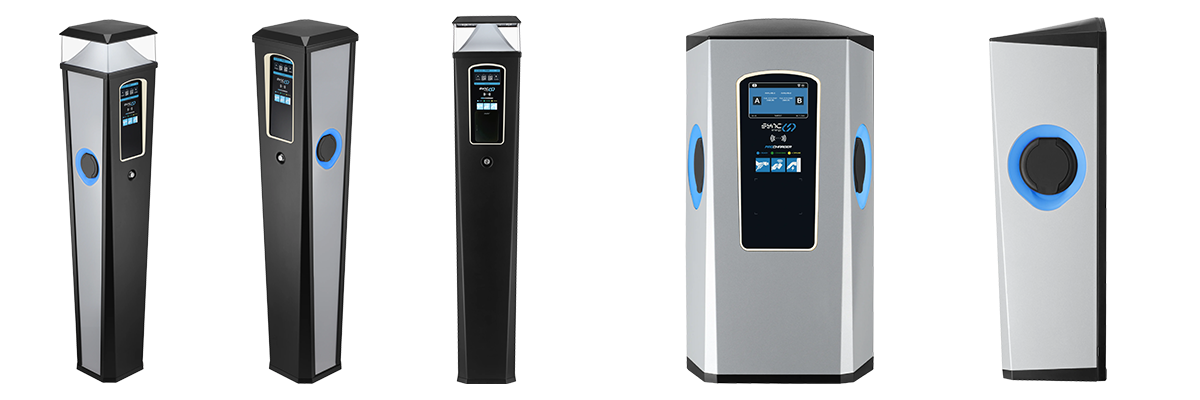
Commercial and Workplace Charging Options
While the Sync ecosystem is well suited to domestic properties, the range also includes options for commercial environments. Variants of the charger support connectivity and access control features suitable for workplaces, depots and shared parking locations.
Businesses looking to install commercial EV chargers can integrate charging into a broader energy system that includes solar and storage. This can help reduce peak demand and make better use of on-site generation.
For installers working across both domestic and commercial sectors, this provides a consistent platform that can be adapted to different project types.
How Sync Energy Compares to Other Home Energy Systems
The UK market now offers several well-known battery and inverter ecosystems, including solutions from brands such as GivEnergy, Tesla, Fox ESS and Sunsynk. Each has its strengths, but most systems still involve combining components from multiple manufacturers or using separate apps for different parts of the installation.
The main difference with the Sync Energy approach is that it has been designed as a coordinated ecosystem from the outset. Battery storage, inverter control, EV charging and energy diversion are all intended to work within the same environment rather than being added together from separate platforms.
For installers, this can reduce commissioning time and simplify system handover. For homeowners, it creates a clearer overview of how energy is being generated, stored and used throughout the property.
As with any system, specification should be based on property size, usage patterns and budget. Some installations may still benefit from mixing components across brands. However, for projects where simplicity and integration are priorities, a single-brand ecosystem is increasingly attractive.
Who the Sync Energy Ecosystem Is Best Suited For
This type of integrated setup can work across a wide range of properties, but it is particularly suited to:
- Homes installing solar and battery storage at the same time
- Properties planning for EV charging alongside solar
- Retrofit installations looking to upgrade gradually
- New-build homes requiring a clean, coordinated system
- Installers wanting a consistent platform across projects
Because the system is modular, it does not have to be installed all at once. A homeowner might start with EV charging and add storage later, or begin with a battery system and integrate charging once an electric vehicle is purchased.
This flexibility is one of the key reasons integrated systems are gaining traction across the UK market.
Is an Integrated Home Energy System Worth Considering?
As electricity pricing and energy usage continue to evolve, more homeowners are looking for ways to manage their consumption more intelligently. Systems that combine generation, storage and smart usage are becoming increasingly common.
The Sync Energy range offers a coordinated approach that can simplify both installation and long-term operation. By providing a single ecosystem that handles solar, storage, EV charging and energy diversion, it aims to remove many of the compatibility issues traditionally associated with multi-brand setups.
For installers, it offers a predictable platform that can be specified across different property types. For homeowners, it provides a scalable route into home energy storage without committing to a fixed system size from day one.
As the UK moves further toward electrification of heating and transport, integrated systems like this are likely to become more common across both domestic and commercial installations.
Explore the Sync Energy Range
If you are planning a new installation or researching options for a future upgrade, you can explore the full range below:
- View the Sync Energy brand range
- Flow All-in-One Home Energy System
- Flow Hybrid Inverter
- Flow Battery Module
- Wall Charger 2 Socketed
- Wall Charger 2 Tethered
- Solar Power Diverter
You can also browse related categories including solar batteries, solar inverters, home energy storage systems and EV chargers.
Frequently Asked Questions
Can the Sync Energy battery system be expanded later?
Yes. The Flow battery modules are designed to be added over time, allowing storage capacity to increase as household energy usage grows.
Does the system work without solar panels?
Yes. The battery and EV charger can still be used with grid electricity and time-of-use tariffs. Solar can be added later if required.
Is the EV charger compatible with other solar systems?
The charger uses a CT clamp to monitor export and can operate with existing solar installations, even if they are not part of the full Sync ecosystem.
Can the system be installed in stages?
Many installations are completed in stages. A homeowner may begin with an EV charger or battery system and expand later as requirements change.
Is this suitable for commercial properties?
Yes. Certain charger variants and system configurations are suitable for workplaces and commercial sites, particularly where solar generation and storage are already in place.